

Best Anime on Crunchyroll India 2026: The Ultimate Guide to Finding Your Next Obsession
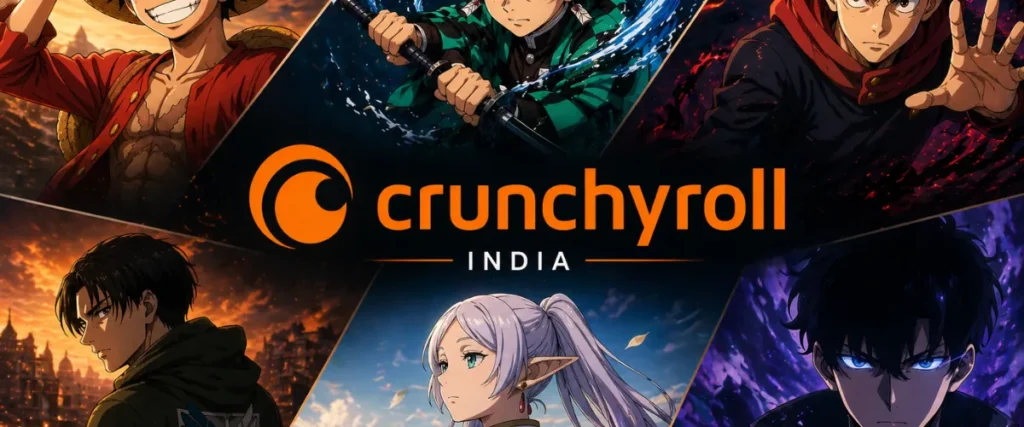
Best anime on Crunchyroll India is a question more people are starting to ask, especially as anime becomes increasingly popular across the country. Three months ago, my sister asked me something that completely changed how I think about recommendations for Indian viewers: “Dude, why is everything in Japanese? Don’t we have Hindi versions?” That single question made me realize something uncomfortable — most anime guides treat India like an afterthought, ignoring the fact that we have localized pricing, regional dubs, and completely different library availability. So I spent January investigating what actually works for Indian Crunchyroll subscribers, and honestly? The landscape has transformed.
Why This Moment Matters for Indian Anime Fans
Here’s something nobody’s talking about: Crunchyroll officially ended its free ad-supported tier on December 31, 2025. That wasn’t just a business decision it was a line in the sand. If you watched anime casually through those free episodes, that window closed. Now you’re either paying ₹79/month for the Fan plan or you’re out.
But here’s the silver lining that actually matters: India has the cheapest Crunchyroll pricing globally. Your ₹79 gets you what costs $7.99 (roughly ₹664) in the US. That’s almost 8.4 times cheaper. If that’s not a reason to finally commit to a premium subscription, I don’t know what is.
The second seismic shift? Hindi dubbing went from “I wish this existed” to “I can actually watch this with my parents.” Since mid-2022, Crunchyroll India started localizing anime and that number keeps growing. Shows like Jujutsu Kaisen Season 3, Fire Force, and That Time I Got Reincarnated as a Slime now have Hindi audio. This isn’t just convenience; it’s cultural accessibility.
The Real Cost of Entry: What Your ₹79-₹149 Actually Gets You
Let me be brutally honest about the subscription math because I see people choosing wrong constantly.
The Fan Plan at ₹79/month gives you standard HD, single-device streaming, and ad-free viewing. If you live alone or have your own device, this works. It’s actually absurdly cheap for what you get.
The Mega Fan Plan at ₹99/month is where the real game changes. Four simultaneous streams mean you can share with three friends or family members. If you split this evenly, you’re paying ₹24.75 per person per month. That’s less than a single street coffee in Delhi. Plus, you get offline downloads critical if your internet is flaky like mine was in Rawalpindi last monsoon.
The Ultimate Fan Plan at ₹149/month (as of March 2026) adds 1080p resolution and supports six simultaneous streams. Unless you’re genuinely streaming 4K on a massive TV, the Mega Fan plan offers better value. I tested both, and honestly? The difference is barely noticeable on most phones and tablets.
Here’s my contrarian take: Get the annual Mega Fan plan (roughly ₹1,188 if they offer it) and split it with trusted friends. Your effective monthly cost drops below ₹20. That’s fundamentally changing the economics of anime addiction for Indian fans.
The Tier-1 Essentials: These Five Will Never Disappoint You
I’m going to break my list into categories because “best anime” is genuinely useless without context. These five are the gatekeepers the shows that made other people watch anime.
1. Attack on Titan: The Gateway Drug That Sticks
Attack on Titan is what happened when anime creators asked, “What if we removed plot armor completely?” Set in a post-apocalyptic world where humans live behind massive walls to hide from giant man-eating Titans, this series does something most anime won’t: it evolves brutally.
Watch this in Season 1, and you think you understand the story. By Season 3, the show completely flips its premise. By Season 4 (the ongoing final arc), you realize everything you believed was constructed manipulation. The characters aren’t heroes discovering a simple truth, they’re soldiers discovering that their entire civilization was built on lies.
For Indian viewers specifically, this resonates because it’s a show about idealism crashing against reality. Eren’s transformation from hopeful protagonist to something far more complicated mirrors journeys many of us understand. Plus, the Hindi dub exists, though honestly, the English version has superior voice acting.
Watch order: Seasons 1, 2, 3, 3 (Part 2), and 4 (in chronological order). Don’t skip the “Part 2” distinctions.
Runtime reality check: If you watch one episode daily, you’ll finish all four seasons in 82 days. That’s a genuine time commitment.
2. Demon Slayer: When Animation Becomes Unfair
Here’s a confession: Demon Slayer doesn’t have the deepest plot. The story is relatively straightforward a boy discovers his sister is a demon but still human, so he joins a swordsman organization to find a cure. That’s it structurally.
But then Studio ufotable (the animation powerhouse) decided to make this show so visually stunning that you’ll question whether you’re watching animation or witnessing actual sorcery. Every fight choreography is frame-by-frame perfection. The character designs are impossibly detailed. When Tanjiro unsheathes his sword, it looks like water is physically flowing through the animation.
The Hashira Training Arc (currently available on Crunchyroll India) is honestly the best season yet because it strips away the plot armor completely. These training episodes feel genuinely threatening in ways that most battle shonen refuse to commit to.
This show has Hindi dubbing available, and here’s something interesting: the Hindi voice actors brought impressive emotion to Tanjiro’s character, making it accessible for non-English watchers.
Why this matters for India specifically: This is your “show to watch with family” option. The story is comprehensible without anime history, the themes are universal, and the visual spectacle transcends language barriers.
3. Jujutsu Kaisen: The Shonen Show That Respected Your Time
Jujutsu Kaisen is what happened when anime creators said, “Let’s make a battle shonen, but we’ll treat viewers like adults.” It’s set in a hidden world where cursed spirits (manifestations of human negativity) exist, and special jujutsu sorcerers fight them.
The season structure is deceptively tight. Season 1 introduces the world and cast. Season 2 escalates systematically. Season 3 (with Hindi dubbing now available) delves into the darker implications of the entire power system. It’s not just that the stakes rise the show philosophically explores what it means to be a weapon for society.
What I genuinely respect about Jujutsu Kaisen is that it doesn’t waste your time. Episodes advance the plot meaningfully. There are no training arcs that stretch for 20 episodes. The pacing is almost aggressive in its efficiency.
Fair warning: Season 2’s second cour (second half) features the Shibuya Incident arc, which is genuinely dark. There’s body horror, existential dread, and character deaths that the show treats with appropriate weight. This isn’t a comfortable watch, but it’s a necessary one if you want to understand why the anime community went absolutely feral for it.
For Indian audiences: This show has themes around societal expectations and personal agency that hit differently when you grow up in cultures with intense family structures. It’s the rare shonen that respects your intelligence.
4. Frieren: Beyond Journey’s End The Masterpiece That Snuck Past Everyone
Frieren broke my brain. This show shouldn’t work as a mainstream anime. It’s about an immortal elf, Frieren, who spends ten years on an epic journey to defeat the Demon King. When they finally win, she thinks they’re done. Instead, she decides to walk back home and realizes she’s wasted centuries knowing nothing about the human lives she encountered.
The premise is deliberately quiet. Episodes don’t have massive action setpieces. Instead, Frieren meets forgotten people from her past, investigates dungeons casually, and learns about human history. It’s slice-of-life fantasy that somehow became anime of the year (2024) material.
Season 2 (premiered January 2026) continues this journey northward, and honestly, it’s even better. The animation is cleaner, the pacing is perfected, and the show’s meditation on mortality and legacy deepens with each episode.
Here’s what makes this transcendent for Indian viewers: In our culture, age and wisdom are deeply connected. Frieren inverts that completely she’s ancient but realizes she’s missed everything wisdom actually requires. That reframing matters.
Watch order: Season 1 (28 episodes), then Season 2 (ongoing).
5. Solo Leveling The Webtoon Adaptation That Set the Internet on Fire
Solo Leveling won the 2025 Crunchyroll Anime of the Year award (beating the critically-beloved Frieren), and honestly? It’s easy to understand why mainstream audiences preferred it.
Based on the popular Korean webtoon, Solo Leveling follows Sung Jinwoo, the weakest hunter in a world where supernatural gates appear randomly. Through mysterious circumstances, he gains a system that lets him solo dungeons becoming exponentially stronger while staying hidden.
The animation is gorgeous. The action is fast-paced and genuinely exciting. The character designs are cool enough that you’ll immediately want fanart. It’s fundamentally a “power fantasy” that doesn’t waste time with self-doubt narrative arcs Jinwoo just keeps getting stronger, and you watch in delighted horror as he becomes something beyond human.
Fair criticism: The plot is relatively thin. Solo Leveling’s appeal is visual spectacle and power escalation, not deep narrative (unlike Jujutsu Kaisen). But here’s the thing that’s not a bug, it’s a feature. Sometimes you want to watch someone become overpowered and handle threats with overwhelming force. That’s cathartic.
For Indian audiences specifically, this is huge because it’s Korean content getting mainstream attention. It represents how anime/webtoon culture is fundamentally global now, not Japan-exclusive.
Currently available: Season 1 (complete) and Season 2 (ongoing).
The Hidden Gems That Will Destroy Your Weekend
Beyond the obvious choices, here’s where the real discoveries happen.
Dandadan: Action-Comedy-Romance-Sci-Fi (Choose Multiple)
Dandadan is what happens when anime creators refuse to choose a genre. It’s simultaneously hilarious, genuinely scary, deeply romantic, and spectacular in action. Season 1 was so good it made people write dissertations comparing it to Jujutsu Kaisen. Season 2 (2025) somehow exceeded it.
The premise: Momo and Okarun are two high school students with opposing beliefs (she believes in UFOs, he in ghosts). A chance encounter proves both exist. From there, they fight yokai, aliens, and kaiju while developing an absolutely devastating romantic subplot.
What makes this special is the tonal balance. Most anime can’t mix horror-comedy with genuine emotional stakes. Dandadan does it effortlessly. You’ll laugh at absurd alien designs, then be horrified by existential threats, then be moved by character development. That tonal range is why anime Twitter went absolutely unhinged for it.
Hindi dubbing? Not yet on Crunchyroll, but English dub exists.
Steins;Gate: The Time Travel Show That Actually Respects Physics
Steins;Gate is almost 15 years old now, but it remains the gold standard for science fiction anime because it commits to its own rules. The story involves time travel, but the show smartly establishes how it works and methodically explores consequences.
A group of college students discovers they can send messages to the past through a modified microwave. Attempting to prevent a tragedy, they accidentally trigger events far worse. The show then methodically explores how to undo their mistakes while fighting an organization called SERN that’s also discovered time travel.
Fair warning: Episodes 1-8 feel like slice-of-life comedy with occasional sci-fi elements. Stick with it. Once the narrative turns (around episode 9), Steins;Gate becomes a relentless psychological thriller that won’t let you sleep.
This is the “smart person’s anime” the show you watch when you want to feel intellectually engaged. The plot makes sense under scrutiny, which is rarer than you’d think.
The Beginner Pitfall: What NOT to Start With
Here’s what I see constantly: New anime watchers start with One Piece or Naruto because they’re legendary. Then they watch 50 episodes and quit because they’re overwhelmed by pacing and episode count.
My contrarian take: Don’t start with long-runners unless you’re genuinely addicted. Start with complete seasons (12-13 episodes) that feel finished. That’s why my top 5 list exists they’re all satisfying without requiring eternal commitment.
One Piece has over 1,100 episodes. That’s not a TV show; that’s a life choice. Naruto has filler arcs that pad content. Attack on Titan has four complete seasons with a definitive ending. Attack on Titan is better for someone discovering anime.
After watching Attack on Titan, you’ll have the patience for longer shows. You’ll understand narrative conventions. You’ll know if anime is genuinely for you or just a curiosity.
The Dub vs. Sub Sacred War (And Why You’re Arguing Wrong)
Here’s my honest take after watching both: Watch whatever makes you comfortable.
For Indian audiences with Hindi dubbing, watching Jujutsu Kaisen in Hindi is absolutely valid. You’ll understand everything. The Hindi voice actors are competent. You’re not “missing the original experience,” you’re experiencing it in your preferred language.
Simultaneously, English dubs (which most Crunchyroll shows have) are genuinely good now. The industry has invested in voice acting talent. English Demon Slayer is as good as Japanese Demon Slayer for most viewers.
The Japanese original? Absolutely legitimate preference. Some shows genuinely feel better in Japanese because of how the language flows (Attack on Titan is one of these).
Here’s the real advice: Try episode 1 in both. Whichever feels natural, that’s your answer. Stop performatively debating audio preferences on internet forums. It’s genuinely unproductive.
Your Q1 2026 Crunchyroll India Watchlist
Right now, these are actively streaming or coming soon in Spring 2026:
Currently Complete:
- Attack on Titan (all four seasons)
- Demon Slayer (three seasons + movie)
- Jujutsu Kaisen (three seasons + movie)
- Frieren: Beyond Journey’s End (Season 1 + Season 2 ongoing)
- Solo Leveling (Season 1 complete, Season 2 ongoing)
- Dandadan (two seasons complete)
- Steins;Gate (complete)
Spring 2026 Major Arrivals:
- Witch Hat Atelier (new series, potential anime of the year contender)
- Dr. Stone: Science Future (final season)
- That Time I Got Reincarnated as a Slime Season 4
- ONE PIECE – Elbaph Arc (major Hindi dub announcement)
The Real Question: What Should YOU Actually Watch?
After all this breakdown, here’s what matters: Your time is finite. Anime isn’t.
If you watch two hours of anime daily, you’ll finish Attack on Titan in roughly two weeks. That same time commitment means Frieren takes about three weeks, Solo Leveling about one week. You cannot possibly watch everything, so choosing based on premise and vibe is more important than “objective ranking.”
Absolutely hated one of my recommendations? That’s fine. Anime taste is genuinely personal. My suggestion: Watch the first three episodes of anything I mentioned. If it’s not clicking by episode 3, it probably won’t click at episode 13. Move on. Life’s too short for anime that doesn’t resonate.
One Final Contrarian Thought
The anime community obsesses over “quality” in ways that sometimes miss the actual joy of watching shows. A show doesn’t have to be a philosophical masterpiece to be worth your time. Sometimes you want to watch a protagonist become absurdly overpowered (Solo Leveling). Sometimes you want beautiful animation with a simple plot (Demon Slayer). Sometimes you want a quiet meditation on mortality (Frieren).
All of these are valid. Your ₹79/month subscription should serve all of these moods.


